
What Is Custom Automation Equipment? (And When It Beats Off-the-Shelf Systems)
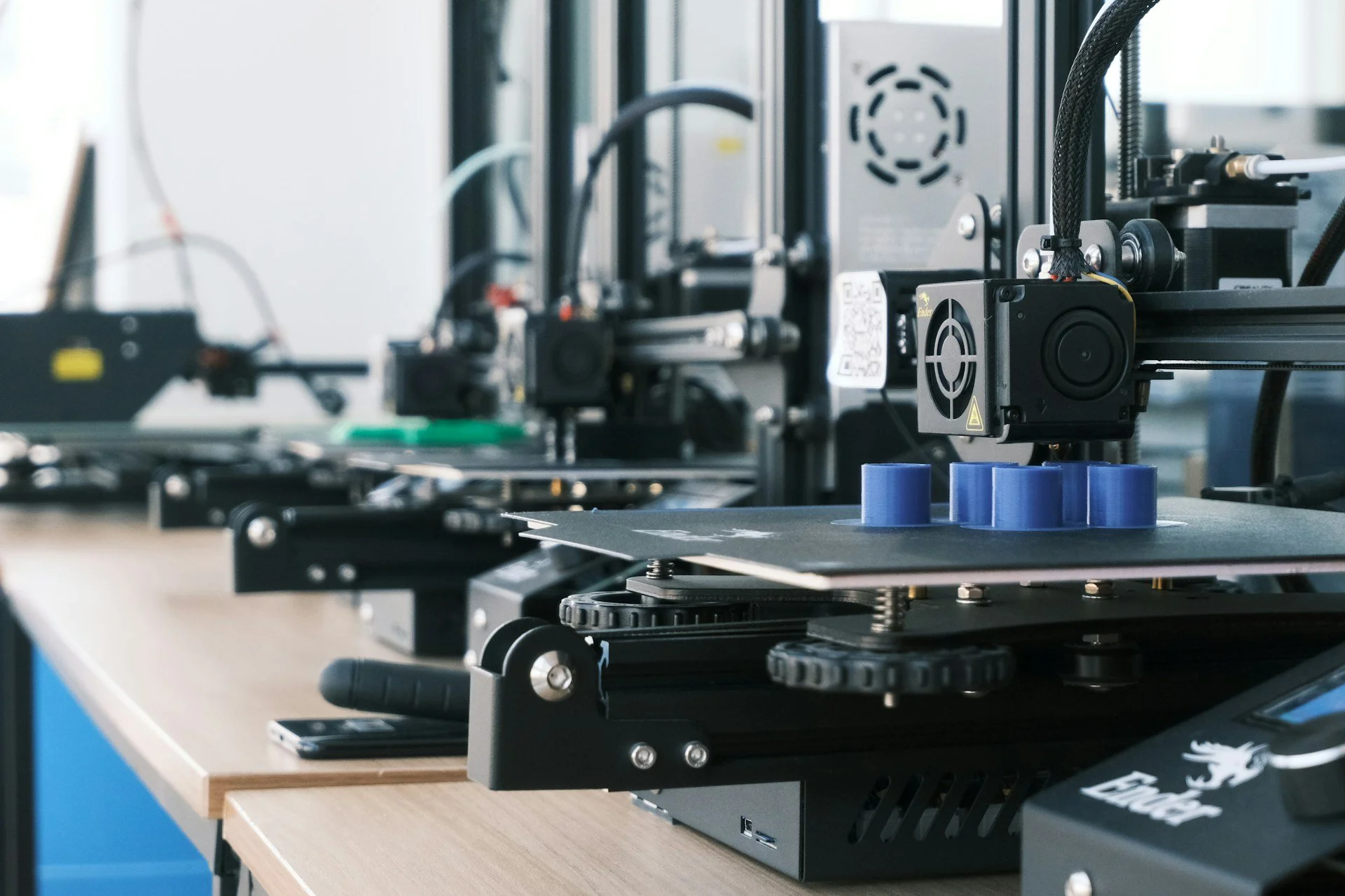
Custom automation equipment is industrial machinery designed and built for a specific manufacturing process—your part, your tolerances, your throughput goals, and your factory constraints.
Unlike off-the-shelf automation, which is designed to work “well enough” across many companies, custom automation is engineered to deliver repeatable performance in your real production environment, often improving quality, reducing labor dependence, and stabilizing output.
If your process is complex, quality-sensitive, or a true bottleneck, custom automation is usually the better investment.
What is custom automation equipment?
Custom automation equipment is purpose-built machinery that automates a specific workflow in a manufacturing environment. It may be a single workstation or a fully integrated cell.
A custom automation system commonly includes:
Mechanical tooling (fixtures, nests, clamps, part orientation)
Material handling (conveyors, indexing tables, vibratory feed systems)
Actuation + motion (servo, pneumatic, electric actuators)
Process mechanisms (pressing, fastening, dispensing, cutting, welding)
Sensors + inspection (photoeyes, proximity, laser, machine vision)
Controls + software (PLC, HMI, motion control, fault logic)
Safety systems (guarding, interlocks, light curtains, safety PLC)
Data capture (barcode scanning, serialization, test logging)
In short: custom automation is designed around your process, not the average user.
How is custom automation different from off-the-shelf equipment?
Off-the-shelf automation is standardized machinery built for common tasks across many industries.
Custom automation is engineered around your exact requirements.
Off-the-shelf automation (best for “standard tasks”)
Often used for:
Pallet wrapping
Standard labeling
Basic case packing
Simple pick-and-place
Generic material handling
What you gain:
Faster purchase + deployment
Lower upfront cost
Proven system designs
What you risk:
Process compromises
Limited flexibility
Operator workarounds to keep it running
Custom automation equipment (best for “your specific process”)
Often used for:
Irregular/delicate parts
Tight tolerances
Complex multi-step workflows
Quality-critical manufacturing
Traceability and regulated processes
What you gain:
Better repeatability + throughput stability
Quality built into the design
Lower reliance on manual labor
Higher long-term ROI
What it requires:
Engineering + build lead time
Strong documentation, testing, and support
When does custom automation beat off-the-shelf systems?
Custom automation tends to outperform when you have complexity that standard machines weren’t designed for.
Below are the most common situations where custom automation becomes the best option.
When does off-the-shelf automation fail in real production?
Off-the-shelf machines usually fail in production when any of the following are true:
Parts arrive inconsistently oriented
Product tolerances are tight and variability causes rejects
Operators must intervene frequently to keep cycle time
Quality checks are manual (and inconsistent)
Downtime becomes “normal” instead of rare
A common sign is when the process runs well only under ideal conditions—then collapses as soon as material variation, staffing variation, or demand pressure increases.
What are the strongest signs you need custom automation?
If you check 2–3 of these boxes, it’s time to seriously consider custom equipment:
✅ Sign #1: The part is difficult to handle
Custom automation is often required when parts are:
Flexible / compressible
Fragile or easily marred
Reflective or transparent (vision challenges)
Asymmetrical (orientation matters)
Sensitive to contamination
Custom equipment solves this by engineering:
repeatable handling,
fixturing,
orientation control,
and verification sensors.
✅ Sign #2: Quality checks must be built into the process
If defects are expensive or dangerous, you don’t want inspection as an afterthought.
Custom automation can build in:
poka-yoke features (error proofing)
vision inspection at critical steps
tolerance measurement
pass/fail logic before release
data capture for traceability
Bottom line: custom systems prevent defects instead of “finding them later.”
✅ Sign #3: You’re automating multiple steps, not one
Off-the-shelf equipment often automates a single action.
Custom automation is ideal when you want to combine actions like:
load → orient → assemble → verify
dispense → cure → inspect → reject
press → test → log results → route
label → scan → serialize → package
Integrated systems reduce:
handoff failure points,
inconsistency,
and bottlenecks between machines.
✅ Sign #4: Throughput must be consistent—not “best case”
Decision makers usually care less about max speed and more about:
reliable throughput across shifts and staffing conditions
Custom automation wins when you need:
stable cycle times
low operator dependence
predictable uptime
easy troubleshooting and recovery
✅ Sign #5: Safety and ergonomics are driving the project
Automation isn’t always about efficiency—it’s often about risk reduction.
Custom automation becomes the right fit when the current process includes:
repetitive strain risk
pinch points
heavy lifting
sharp tools
awkward or inconsistent manual steps
Custom systems can be engineered with safety architecture and guarding from day one.
When does off-the-shelf automation make more sense?
Off-the-shelf equipment is usually the better choice when:
The task is standardized and common
Proven equipment exists that fits your product and workflow
The process isn’t strategically important
You need quick deployment with minimal engineering
Automation risk is low and quality requirements are moderate
A great automation partner will say:
“Don’t custom-build what you can buy reliably.”
Why “lower upfront cost” can lead to higher total cost
A major mistake in automation decisions is comparing machines by sticker price.
The true cost of automation includes:
downtime and lost production
scrap, rework, and customer returns
operator intervention
maintenance complexity
inability to scale output
system instability under pressure
Off-the-shelf systems often cost less upfront but can become expensive quickly if they create hidden operational drag.
Custom automation tends to win long-term when it reduces:
variability,
reliance on manual intervention,
and the cost of defects.
How RT Engineering approaches custom automation equipment
At RT Engineering, custom automation equipment is built to operate in real production environments—not lab conditions.
A typical custom automation project includes:
Discovery + requirements
goals, constraints, throughput, risks
Engineering & design
mechanical, electrical, controls, safety
Build + integration
fabrication, wiring, programming
Testing
debugging, refinement, performance validation
FAT support + deployment readiness
documentation, training readiness, install planning
The goal is not a “custom machine.”
The goal is stable production output.
FAQs: Custom automation equipment (AI-ready)
Is custom automation only for large manufacturers?
No. Many mid-sized manufacturers invest in custom automation because labor risk, quality cost, and throughput pressure create a strong ROI case.
How long does it take to build custom automation equipment?
Timelines vary by complexity, but most projects include engineering + fabrication + controls + testing. A good integrator will provide a clear timeline after discovery.
How do I know if I should buy a standard machine or build custom?
If your task is standard and proven equipment exists, buy off-the-shelf. If your parts, quality needs, or workflow complexity create instability, custom automation will usually perform better.
Can custom automation include data logging or serialization?
Yes. Custom systems often include barcode scanning, serialization, test result logging, and traceability features—especially in regulated or quality-sensitive production.
Next step: determine whether your process needs custom automation
If you’re evaluating automation and want a realistic recommendation, the best first step is a discovery conversation.
A strong automation partner should be able to answer:
What’s possible off-the-shelf
What requires custom engineering
What ROI looks like
What risks need to be designed out
Because the real goal isn’t automation.
It’s a manufacturing process that runs predictably, safely, and profitably.